
Hendry Santoso – Market Research & Feasibility Study
Setting the Strategic Stage
Indonesia enters 2025 at a critical moment in its pursuit of a more sustainable and future-ready transportation system. As global momentum builds around climate action, the country is aligning its national priorities with the global shift toward electric mobility. Rapid urbanization, rising vehicle ownership, and worsening air quality have made the transition to electric vehicles not just a strategic ambition, but an environmental necessity. In response, the government has introduced targeted policies and financial incentives aimed at accelerating EV adoption, signaling strong top-down commitment.
Indonesia’s competitive edge lies in its abundant nickel reserves—a core material for EV batteries—which has drawn the attention of global automakers and battery producers. This resource advantage, coupled with government support, has positioned the country as a rising EV manufacturing hub in Southeast Asia. Chinese, South Korean, and other international players are increasingly anchoring their supply chains in Indonesia, bringing capital, technology, and industrial momentum.
This report examines the evolving electric vehicle ecosystem in Indonesia, with a focus on both cars and motorbikes. It highlights key market movements, emerging infrastructure, policy directions, and ongoing challenges—offering a clear, forward-looking view of how Indonesia can translate its resource potential into long-term competitiveness in the global EV race.
Mapping the EV Momentum
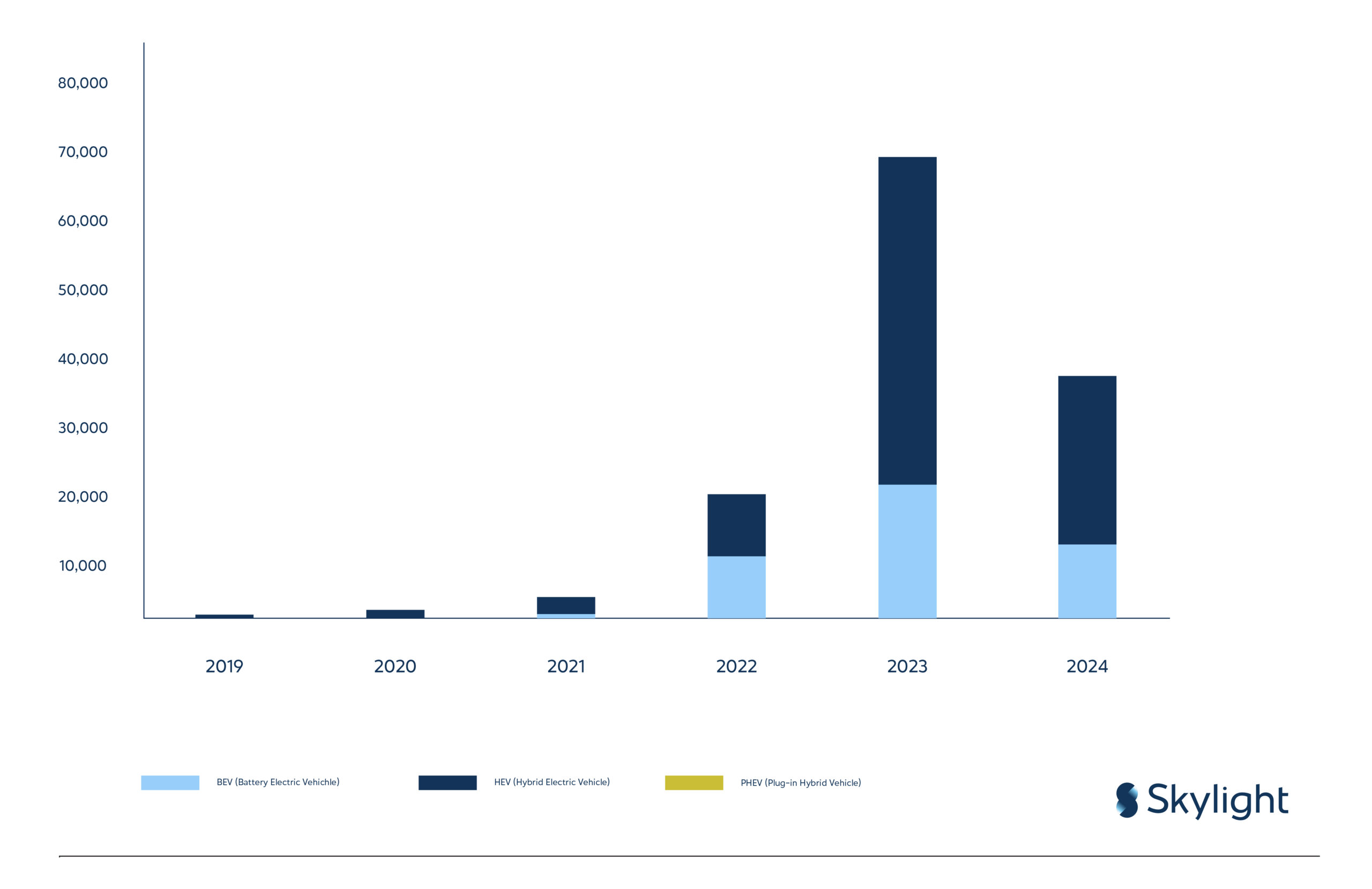
The Indonesian electric vehicle market has shown robust growth, influenced by factors such as government incentives, increasing fuel prices, and consumer preferences shifting towards sustainability. Indonesia embarked on its journey of Electric Vehicle (EV) car manufacturing in 2022, marking a significant milestone for the country. Its large population and substantial nickel reserves, which are crucial for electric vehicle batteries, make it an attractive market for investors. These resources have sparked interest not only in EV production but also in related sectors like smelting and battery manufacturing.
Electric Cars:
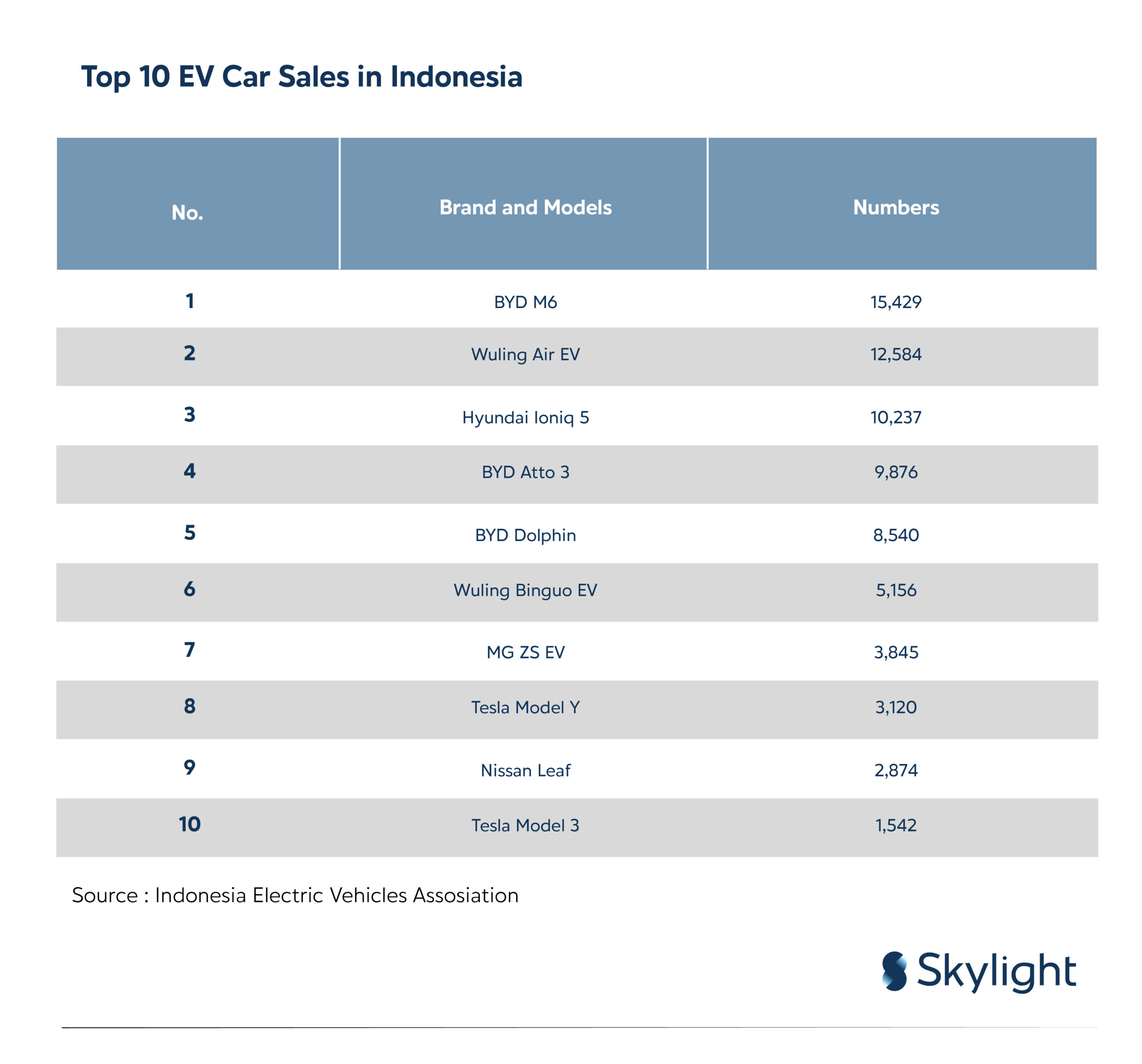
- Rapid introduction and popularity of affordable EV models from Chinese manufacturers, especially BYD, have significantly driven market growth.
- Increased consumer trust and improved infrastructure have contributed positively
- The introduction and rising popularity of affordable, feature-rich EV models, primarily from Chinese manufacturers like BYD and Wuling, have significantly stimulated consumer interest.
- Increased government incentives such as reduced taxes and import duties have made EVs more accessible and attractive to a broader demographic.
- Improvements in charging infrastructure, including the rapid expansion of public and private charging stations, have bolstered consumer confidence and reduced range anxiety.
- A noticeable shift in consumer attitudes towards sustainability, driven by heightened environmental awareness and educational campaigns, has further driven the adoption of electric cars.
Electric Motorbikes:
- Electric motorbike adoption is accelerating, largely due to urban population growth, high motorbike usage, and supportive government
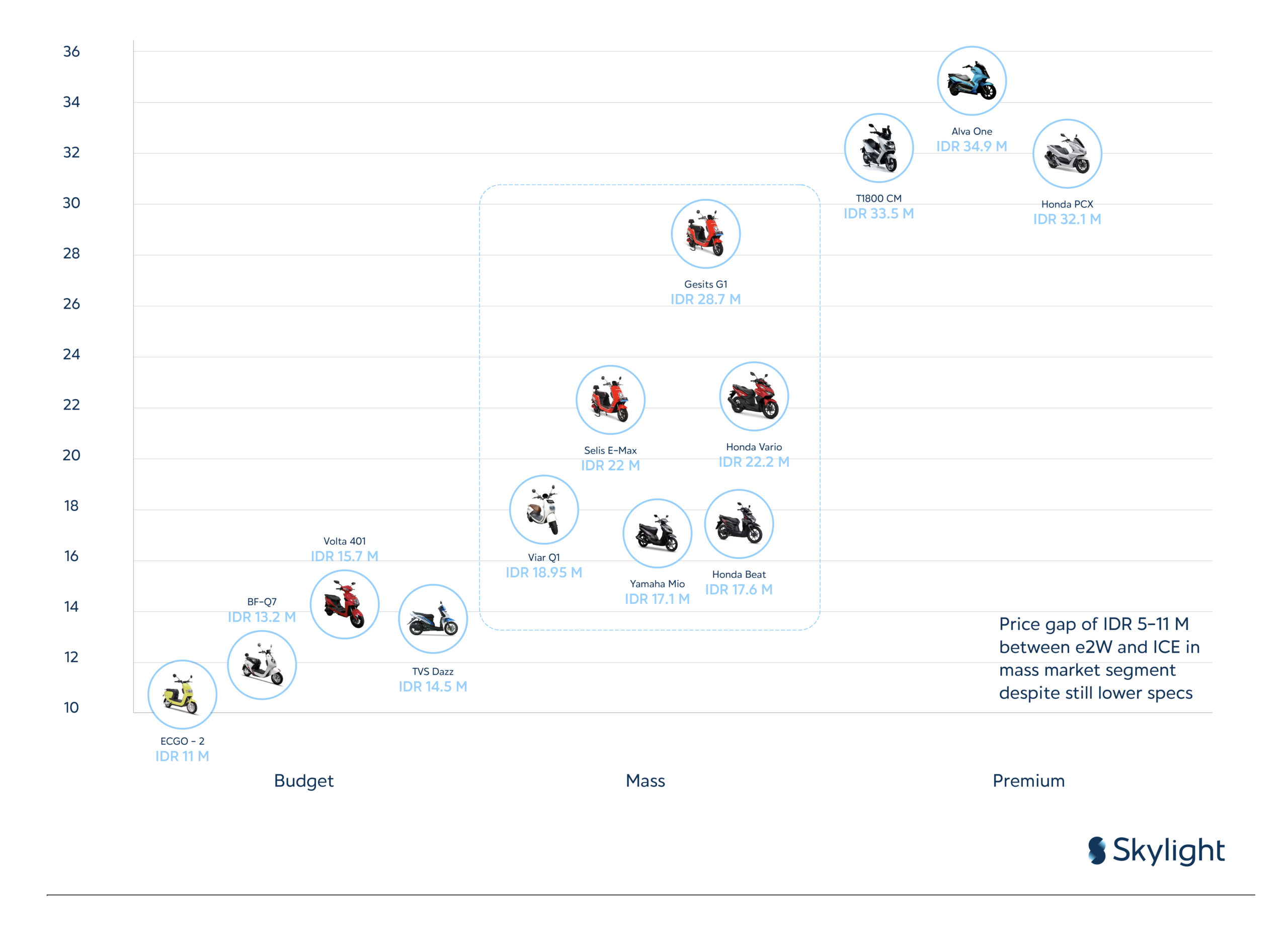
- Electric motorbike adoption has accelerated due to the convergence of Indonesia’s growing urban population, traffic congestion in major cities, and the widespread cultural acceptance and reliance on motorbikes as the primary mode of transportation.
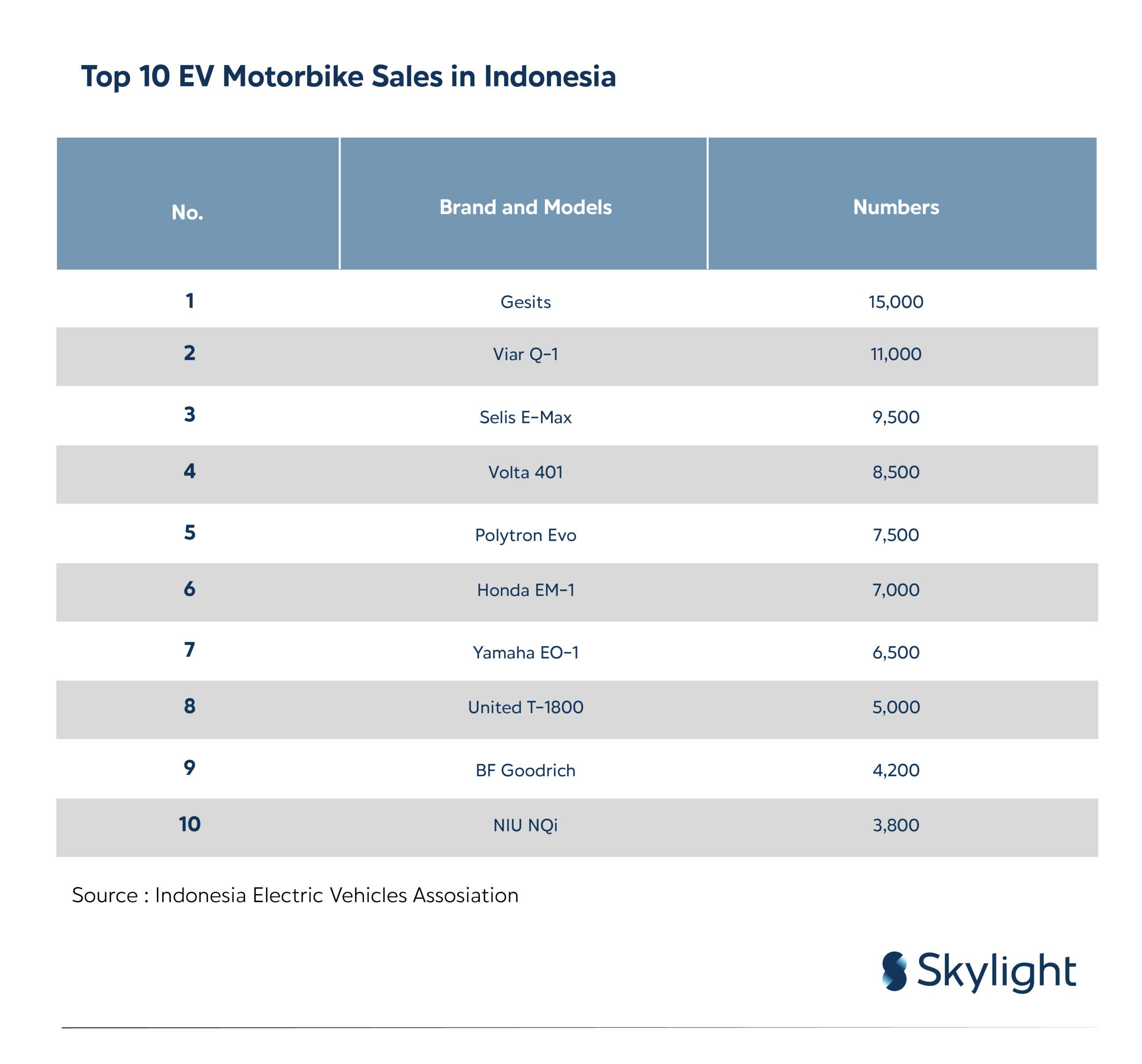
- Local manufacturers, notably Gesits and Viar, have expanded production and diversified their product offerings, receiving strong government support through incentives and tax breaks.
- Consumer preferences have been gradually shifting toward electric motorbikes, driven by lower operating costs compared to conventional petrol-powered motorbikes.
- Innovations in battery technology, which have significantly improved motorbike range and performance, are facilitating wider acceptance among users.
Market Size of Electric Vehicles
The year 2025 marks a significant milestone in Indonesia’s journey toward sustainable transportation. With global awareness of climate change at an all-time high, transitioning to electric vehicles (EVs) has become a critical national priority for Indonesia.
The country, characterized by rapid urbanization and increasing motorization rates, faces growing environmental challenges, including air pollution and carbon emissions. The Indonesian government, recognizing the importance of a sustainable and environmentally friendly transport sector, has implemented various policies and incentives to encourage the adoption of EVs.
The Indonesian EV market is experiencing rapid growth, driven by favorable economic conditions and strategic government initiatives:
Electric Cars:
- In 2024, the electric car market size was approximately USD 450 million, reflecting substantial growth driven by increased consumer adoption, improved affordability, and supportive government policies.
- By 2029, the market is projected to exceed USD 2 billion, marking a compound annual growth rate (CAGR) of nearly 21%, reflecting a robust outlook driven by ongoing infrastructure expansion, technological advancements, and rising consumer demand.
Electric Motorbikes:
- The electric motorbike segment, valued at approximately USD 150 million in 2024, has shown exponential growth driven by increasing urbanization, economic affordability, and favorable government support.
- This market is projected to expand significantly to approximately USD 500 million by 2027, with consumer preferences strongly shifting due to lower operational costs, ease of use in congested urban environments, and consistent policy support from the government.
Friction Points in the Value Chain
Despite its potential, Electric Vehicles faces several challenges in Indonesia. The rapid growth of the electric vehicle market in Indonesia faces significant challenges, including:
Infrastructure Limitations:
- Insufficient charging infrastructure, particularly outside major cities, poses a substantial barrier.
- Rural areas and smaller cities severely lack necessary infrastructure, hindering widespread adoption.
Electrical Grid Stability:
- The existing electrical grid may not handle increased electricity demand from rising EV numbers, necessitating significant infrastructure investments and upgrades.
Environmental Concerns:
- Nickel mining processes for battery production can cause severe environmental damage, including deforestation, pollution, and biodiversity
- Battery disposal and recycling present significant environmental and logistical challenges, with limited existing frameworks to manage end-of- life batteries.
Economic and Market Resistance:
- Resistance from established automotive industry stakeholders committed to internal combustion engines (ICE) remains significant, potentially slowing down policy implementations and market transitions.
- High initial purchase costs for consumers compared to conventional vehicles pose a substantial economic barrier.
Consumer Awareness and Acceptance:
- Misconceptions and limited public knowledge about EV technology, range, and reliability hinder broader adoption.
- Efforts to educate consumers about EV benefits and practicality remain
Supply Chain and Production Challenges:
- Dependence on imported components, particularly high-capacity batteries, exposes the local industry to supply chain disruptions.
- Developing domestic battery manufacturing capabilities requires substantial investments and technological know-how.
Regulatory and Policy Implementation Issues:
- Inconsistent enforcement and implementation of supportive government policies at local levels may limit effectiveness.
- Bureaucratic challenges and regulatory complexity create barriers for investors and manufacturers, slowing the growth trajectory.
Global Playbook for Progress
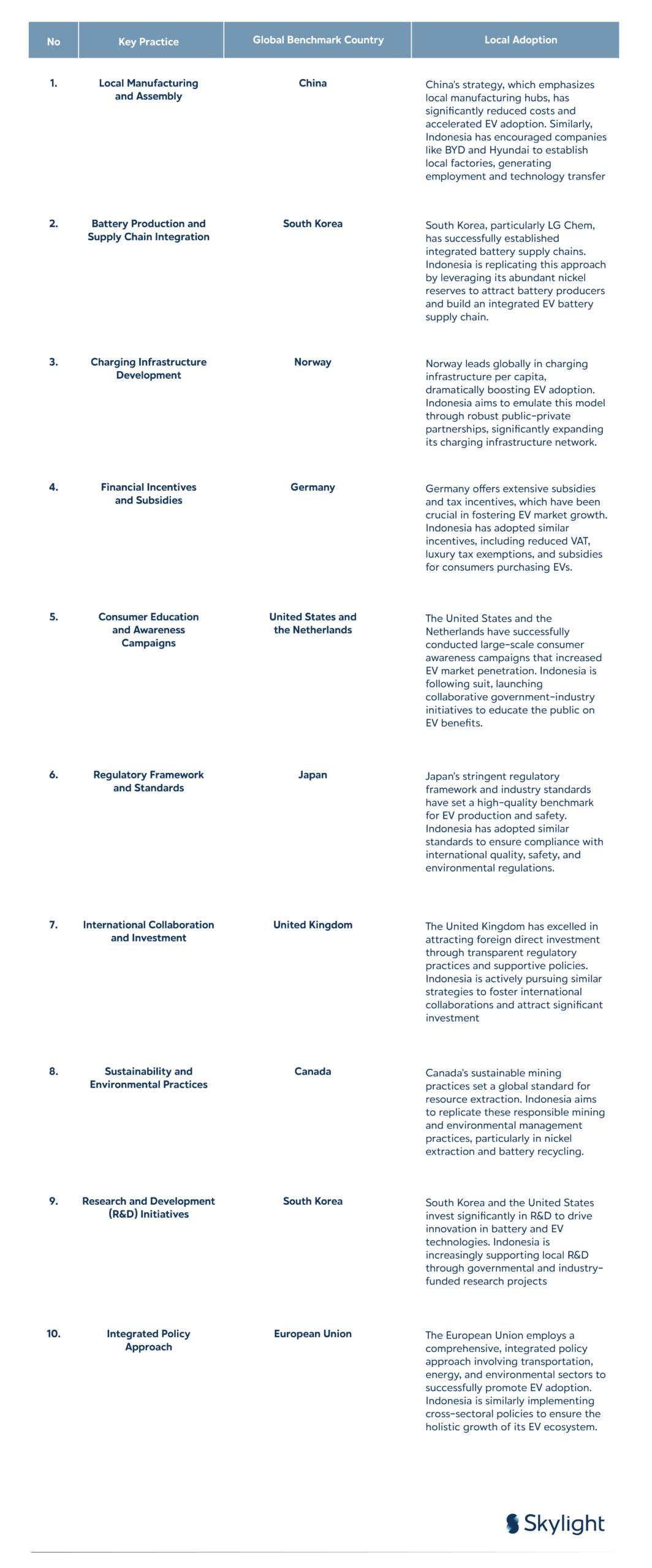
The EV industry in Indonesia follows several benchmark and common practices that are prevalent globally, with concrete comparisons to international examples:
Positioning for Global Relevance
Indonesia stands at a pivotal moment in its pursuit to become a global leader in the EV industry. With abundant nickel reserves, a strong government push, and growing international interest, the country holds a strategic advantage. However, to fully realize this potential, it must address several structural challenges with coordinated and forward-looking solutions. Sustainable mining practices are essential to prevent environmental degradation and protect the industry’s long-term credibility. Building robust domestic manufacturing capabilities and accelerating technology transfer will reduce dependence on foreign expertise and strengthen local resilience. Nationwide EV adoption also hinges on equitable infrastructure development, particularly expanding charging networks beyond urban centers, supported by a modernized and stable electrical grid. Financial barriers remain a constraint for many consumers, calling for expanded incentives and accessible financing models. Public awareness campaigns are equally important to overcome misconceptions and increase consumer confidence. At the same time, a streamlined regulatory framework, aligned with international standards, will ensure quality, safety, and sustained investment. Addressing battery lifecycle management through recycling infrastructure will further bolster environmental sustainability. Finally, scaling up local research and development is critical to foster innovation, drive competitiveness, and reduce reliance on imported technologies. By integrating these efforts into a coherent national strategy, Indonesia can build a competitive, inclusive, and sustainable EV ecosystem—positioning itself as a leader in the global clean energy transition.
Sources
- Skylight Analytics Hub
- Asian Development Bank. (2023). Accelerating Electric Mobility in Indonesia. Manila: Asian Development Retrieved from https://www.adb.org/publications/accelerating-electric-mobility-indonesia
- International Energy Agency (IEA). (2024). Global EV Outlook 2024. Paris: IEA Publications. Retrieved from https://iea.org/reports/global-ev-outlook-2024
- Kementerian Energi dan Sumber Daya Mineral Republik Indonesia. (2023). Roadmap Kendaraan Listrik Jakarta: KESDM. Retrieved from https://www.esdm.go.id
- Ministry of Industry, Republic of Indonesia. (2023). Electric Vehicle Industrial Development in Jakarta: Ministry of Industry. Retrieved from https://www.kemenperin.go.id
- Norwegian Ministry of Climate and Environment. (2023). Electric Mobility: Lessons from Norway. Oslo: Norwegian Ministry of Climate and Environment. Retrieved from https://regjeringen.no
- (2024). BYD expands Indonesian plant to boost EV production. Retrieved from https://www.reuters.com/business/autos-transportation/byd- expands-indonesian-plant-boost-ev-production-2024
- South Korea Ministry of Trade, Industry, and Energy. (2024). EV Battery Industry Strategy and Supply Chain Management. Seoul: MOTIE. Retrieved from https://english.motie.go.kr
- United Nations Environment Programme (UNEP). (2023). Environmental Impacts of Nickel Mining for Electric Vehicle Batteries. Nairobi: UNEP Publications Retrieved from https://unep.org/resources/report/environmental-impacts-nickel- mining
- World Economic Forum. (2023). The Future of Electric Vehicles and Infrastructure. Geneva: World Economic Retrieved from https://www.weforum.org/reports/future-electric-vehicles-infrastructure
- World Resources Institute. (2023). Sustainable Battery Supply Chains. Washington, C.: World Resources Institute. Retrieved from https://www.wri.org/research/sustainable-battery-supply-chains
Disclaimer
The content on this platform (“Platform”) is proprietary to Skylight, protected under copyright and intellectual property laws, and cannot be reproduced or used without written authorization. The insights shared are for informational purposes only, do not constitute professional advice, and may not reflect the latest industry developments. Skylight and its contributors disclaim all liability for actions taken based on the content and do not guarantee specific outcomes from past insights or case studies. Use of the Platform does not establish any contractual or advisory relationship with Skylight. By accessing this Platform, you agree to these terms. © 2025 Skylight Strategic Indonesia. All rights reserved.